Is object storage outpacing structured and unstructured data growth?

NASA Blue Marble 2007 West by NASA Goddard Photo (cc) (from flickr)

At the Pacific Crest conference this week there was some lively discussion about the differences in the rates of data growth.  Some believe that object storage is growing much faster than structured and unstructured data.  For proof they point to the growth in Amazon S3 data objects and Microsoft Azure data objects.

  • Azure data objects quadrupled between June 2011 and June 2012 from 0.93T to over 4.0T objects.  Recently at the Microsoft Build Conference they indicated they are now storing over 8T objects which is doubling every six months. (See here and here).
  • Amazon S3 has also been growing, in June of 2012 they had over 1T objects and in April of 2013 they were storing over 2T objects. (See here).

For comparison purposes an Amazon S3 object is not equivalent in size to an Azure data object. I believe Amazon S3 objects are significantly larger (10 to 1000X larger) than an Azure data object (but I have no proof for this statement).

Nonetheless, Azure and S3 object storage growth rates are going off the charts.

Comparing object storage growth to structured-unstructured data growth

How does the growth in objects compare to the growth in structured and unstructured storage.  Most analysts claim that data is growing by 40-50% per year. And most of that is unstructured. However I would contend that when you dig deeper into unstructured aggregate, you find vastly different growth trajectories.

Historically, unstructured used to mean file data as well as object data, and it’s only recently that anyone considered tracking them differently.  But if you start splitting out object data from the aggregate how fast is file data growing.

The key is file data growth

Latest IDC numbers tell us that NAS market revenue is declining while open-SAN (NAS and non-mainframe SAN) revenues were up slightly for 2Q2013 (See here for more information). Realize that revenue numbers aren’t necessarily equal to data growth and NAS doesn’t contain unified storage (NAS and SAN) combined (which is how most enterprise vendors sell file storage these days).  The other consideration is that flash’s performance is potentially reducing storage overprovisioning and data reduction technologies (dedupe, compression, thin provisioning, etc.) are increasing capacity utilization which is driving down storage growth.

The other thing is that the amount of data in structured and unstructured forms is probably orders of magnitude larger than object data.

So objects storage is starting at much lower capacities.  But Amazon S3 and Azure data objects are also only a part of the object storage space. Most pure object storage  solutions only reach their stride at 1PB and or larger and may grow significantly from there.

Given all the foregoing what’s my take on the various growth rates of structured, unstructured and object storage, when in aggregate data is growing by 40-50% per year?

Assuming a baseline of 50% data growth rate, my best guess (and that’s all it is) is that,

  • Structured data growth accounts for 15% of overall data growth
  • Unstructured data growth accounts for 25% of overall data growth
  • Object storage accounts for 10% of overall data growth

You could easily convince me that object storage is more like 5% today and divide the remainder across structured and unstructured.

So how much data is this?

IDC claimed that the world created and replicated 2.8ZB of data in 2012 and predict 4ZB of data will be created/replicated in 2013 (~43% growth rate).  So of the 1.2ZB of data created in 2013,  ~0.36ZB of that will be structured, 0.6ZB will be unstructured-file data and 0.24ZB will be unstructured-object storage data.

At first blush, the object storage component looks much too large until you start thinking about all the media, satellite and mobile data being created these days. And then it seems about right to me.

What do you think?

Enhanced by Zemanta

Peak server, the cloud & NetApp storage for AWS

I was at a conference a month or so ago and one speaker mentioned that the number of x86 servers being sold has peaked and is dropping. I can imagine a number of reasons for this and the main one being server virtualization. But this speaker had a different view and it seemed to be the cloud.

Peak server is here.

He said that three companies were purchasing over 1/2 the x86 servers these days. I feel that there should be at least four Google, Facebook, Amazon & Microsoft and maybe five, if you add in Apple.

Something has happened over the past year or so. Enterprise IT has continued along its merry way but the adoption of cloud services is starting to take off.

I have seen this before, with mainframes, then mini-computers, and now client-server. Minicomputers came out and were so easy to use and develop/deploy applications on, that people stopped creating new apps on the mainframe. Mainframes never died out, and probably have never really stopped shipping increasing MIPS every year. But the share of WW MIP installations for mainframes has been shrinking for decades and have never got going again.

Ultimately, the proprietary minicomputer was just a passing fad and only lasted about 25 years or so. It was wounded by the PC, and then killed off by proprietary Unix workstations.

Then it happened again, the new upstart this time was Windows Server and Linux. Once again it was just easier to build apps on these new and cheaper servers, than any of the older Unix servers. Of course there’s still plenty of business in proprietary Unix servers, but again I would venture to say that their share of WW installed MIPS has been shrinking for a long time.

Nowadays, the cloud is mortally wounding the server market. Server virtualization is helping a lot but it’s also enabling the cloud to eliminate many physical server sales. This is because new applications, new IT environments are being ported/moved/deployed onto the cloud.

Peak server means less enterprise networking, storage and server hardware

In this new, cloud world, customers need less servers, less networking and less enterprise class storage. Yes not every application is suitable to cloud deployment but that’s why there’s still mainframes, still Unix servers, and a continuing need for standalone, physical or virtual x86 servers in the enterprise. But their share of MIPs will start shrinking soon if it hasn’t already.

Ok, so enterprise data center share of MIPs will start shrinking vis a vis cloud data centers. But what happens to networking and storage. My view is that networking becomes software defined and there’s a component of that which operates on special purpose hardware. This will increase in shipments but the more complex, enterprise class networking equipment will flatline and never see any more substantial growth.

And up until yesterday I felt much the same about enterprise class storage. Software defined storage in my future, DAS and SSDs for the capacity and the smarts exist in software if at all. Today, most of the cloud and many service providers have been moving off enterprise class storage and onto DAS.

NetApp’s new enterprise storage in AWS

But yesterday I heard about NetApp private storage for the cloud. This is a configuration of NetApp storage installed in a CoLo facility with a “direct connection” to Amazon compute cloud. In this way, enterprise customers can maintain data stewardship/ownership/governance over their data while at the same time deploying applications onto AWS compute cloud.

This seems to be one of the sticking points to enterprise customers adopting the cloud. By having (data) storage owned lock/stock&barrel by the enterprise it seems much easier and less risky to deploy new and old applications to the cloud.

Whether this pans out and can provide enough value to cover the added expense of the enterprise class storage, only the market can decide. But this is the first time I can remember, where any vendor has articulated a role for enterprise class storage in the cloud. Let’s hope it works.

Image: PDP8/s by ajmexico

Windows Server 2012 R2 storage changes announced at TechEd

Microsoft TechEd Trends driving IT todayMicrosoft TechEd USA is this week and they announced a number of changes to the storage services that come with Windows Server 2012 R2

  • Azure DRaaS – Microsoft is attempting to democratize DR by supporting a new DR-as-a-Service (DRaaS).  They now have an Azure service that operates in conjunction with Windows Server 2012 R2 that provides orchestration and automation for DR site failover and fail back to/from remote sites.  Windows Server 2012 R2 uses Hyper-V Replica to replicate data across to the other site. Azure DRaaS supports DR plans (scripts) to identify groups of Hyper-V VMs which need to be brought up and their sequencing. VMs within a script group are brought up in parallel but different groups are brought up in sequence.  You can have multiple DR plans, just select the one to execute. You must have access to Azure to use this service. Azure DR plans can pause for manual activities and have the ability to invoke PowerShell scripts for more fine tuned control.  There’s also quite a lot of setup that must be done, e.g. configure Hyper-V hosts, VMs and networking at both primary and secondary locations.  Network IP injection is done via mapping primary to secondary site IP addresses. The Azzure DRaaS really just provides the orchestration of failover or fallback activity. Moreover, it looks like Azure DRaaS is going to be offered by service providers as well as private companies. Currently, Azure’s DRaaS has no support for SAN/NAS replication but they are working with vendors to supply an SRM-like API to provide this.
  • Hyper-V Replica changes – Replica support has been changed from a single fixed asynchronous replication interval (5 minutes) to being able to select one of 3 intervals: 15 seconds; 5 minutes; or 30 minutes.
  • Storage Spaces Automatic Tiering – With SSDs and regular rotating disk in your DAS (or JBOD) configuration , Windows Server 2012 R2 supports automatic storage tiering. At Spaces configuration time one dedicates a certain portion of SSD storage to tiering.  There is a scheduled Windows Server 2012 task which is then used to scan the previous periods file activity and identify which file segments (=1MB in size) that should be on SSD and which should not. Then over time file segments are moved to an  appropriate tier and then, performance should improve.  This only applies to file data and files can be pinned to a particular tier for more fine grained control.
  • Storage Spaces Write-Back cache – Another alternative is to dedicate a certain portion of SSDs in a Space to write caching. When enabled, writes to a Space will be cached first in SSD and then destaged out to rotating disk.  This should speed up write performance.  Both write back cache and storage tiering can be enabled for the same Space. But your SSD storage must be partitioned between the two. Something about funneling all write activity to SSDs just doesn’t make sense to me?!
  • Storage Spaces dual parity – Spaces previously supported mirrored storage and single parity but now also offers dual parity for DAS.  Sort of like RAID6 in protection but they didn’t mention the word RAID at all.  Spaces dual parity does have a write penalty (parity update) and Microsoft suggests using it only for archive or heavy read IO.
  • SMB3.1 performance improvements of ~50% – SMB has been on a roll lately and R2 is no exception. Microsoft indicated that SMB direct using a RAM DISK as backend storage can sustain up to a million 8KB IOPS. Also, with an all-flash JBOD, using a mirrored Spaces for backend storage, SMB3.1 can sustain ~600K IOPS.  Presumably these were all read IOPS.
  • SMB3.1 logging improvements – Changes were made to SMB3.1 event logging to try to eliminate the need for detail tracing to support debug. This is an ongoing activity but one which is starting to bear fruit.
  • SMB3.1 CSV performance rebalancing – Now as one adds cluster nodes,  Cluster Shared Volume (CSV) control nodes will spread out across new nodes in order to balance CSV IO across the whole cluster.
  • SMB1 stack can be (finally) fully removed – If you are running Windows Server 2012, you no longer need to install the SMB1 stack.  It can be completely removed. Of course, if you have some downlevel servers or clients you may want to keep SMB1 around a bit longer but it’s no longer required for Server 2012 R2.
  • Hyper-V Live Migration changes – Live migration can now take advantage of SMB direct and its SMB3 support of RDMA/RoCE to radically speed up data center live migration. Also, Live Migration can now optionally compress the data on the current Hyper-V host, send compressed data across the LAN and then decompress it at target host.  So with R2 you have three options to perform VM Live Migration traditional, SMB direct or compressed.
  • Hyper-V IO limits – Hyper-V hosts can now limit the amount of IOPS consumed by each VM.  This can be hierarchically controlled providing increased flexibility. For example one can identify a group of VMs and have a IO limit for the whole group, but each individual VM can also have an IO limit, and the group limit can be smaller than the sum of the individual VM limits.
  • Hyper-V supports VSS backup for Linux VMs – Windows Server 2012 R2 has now added support for non-application consistent VSS backups for Linux VMs.
  • Hyper-V Replica Cascade Replication – In Windows Server 2012, Hyper V replicas could be copied from one data center to another. But now with R2 those replicas at a secondary site can be copied to a third, cascading the replication from the first to the second and then the third data center, each with their own replication schedule.
  • Hyper-V VHDX file resizing – With Windows Server 2012 R2 VHDX file sizes can now be increased or reduced for both data and boot volumes.
  • Hyper-V backup changes – In previous generations of Windows Server, Hyper-V backups took two distinct snapshots, one instantaneously and the other at quiesce time and then the two were merged together to create a “crash consistent” backup. But with R2, VM backups only take a single snapshot reducing overhead and increasing backup throughput substantially.
  • NVME support – Windows Server 2012 R2 now ships with a Non-Volatile Memory Express (NVME) driver for PCIe flash storage.  R2’s new NVME driver has been tuned for low latency and high bandwidth and can be used for non-clustered storage spaces to improve write performance (in a Spaces write-back cache?).
  • CSV memory read-cache – Windows Server 2012 R2 can be configured to set aside some host memory for a CSV read cache.  This is different than the Spaces Write-Back cache.  CSV caching would operate in conjunction with any other caching done at the host OS or elsewhere.

That’s about it. Some of the MVPs had a preview of R2 up in Redmond, but all of this was to be announced in TechEd, New Orleans, this week.

~~~~

Image: Microsoft TechEd by BetsyWeber


EMCworld 2013 day 1

Lines for coffee at the Cafe were pretty long this morning and I missed my opportunity to have breakfast to do some work. But eventually made my way to the press room and got some food and coffee.

Spent the morning in Analyst sessions mostly under NDA but it seems safe to say that EMC sees plenty of opportunity ahead.

The first session Q&A with BRS executives and customers was enlightening but the main message from the customers was that data protection is hard, legacy systems often can’t adjust quick enough and sometimes a completely new architecture is warranted. The executives were upbeat about current BRS business and where they were headed in the future.

20130506-142735.jpgRest of the morning was with Jeremy Burton EVP Product, Operations and Marketing and John Roese, the new SVP and CTO of EMC (6 months on the job). Jeremy talked about an IDC insight that there’s a new world emerging so-called 3rd platform applications based on mobile and consumer grade technology  with literally billions of users, millions of apps built on mobile-cloud-bigdata-social infrastructure which complements the 2nd platform built on lan/wan, client server frameworks.

For an example of this environment Jeremy mentioned that AT&T provisions 12PB of storage a month.

What’s needed for this new platform is a new type of storage built for the 3rd platform but taking advantage of current enterprise storage characteristics.  This is ViPR (more on that later)

John comes by way of Huawei, Nortel and myriad others and offers a broad insight to the way forward for EMC. It looks like a bright future ahead if they can do half of what John has outlined.

John talked about the intersections between the carrier market (or services), enterprise IT and consumer market.  There is convergence between these regions and at each of these intersections new technology is going to answer many of the problems which exist. For instance in the carrier space:

  • The amount of information they gather is frightening they know everything about you. Pivotal will be the key here because its good at 1) ability to correlate information across different information sources. Most carriers have a whole bunch of disparate information stores; and 2) It’s not just focused on Big Data as a non-realtime problem but also provides realtime analytics as well.
  • Capital costs are going down but $/bits are going way down.  VMware & Software defined data center is the right way to drive down costs.  Today servers are ~50% virtualized but networking is not virtualized at all.
  • Customers are dissatisfied with service providers (carriers).  Again Pivotal is key here. One carrier customer was focused on customer churn and tried to figure out how to minimize this. They used  Gemfire’ high speed infrastructure that could watchc all transactions on cell tower infrastructure pick out dropped calls, send it to Greenplum and correlate this with the customer attributes (good or bad), and within 100msec supply an interaction with the customer in to apologize and offer some services to make it better.
  • Internet is the new wild west –use at your own risk,  spoofing websites, respond to email could be anyone, chaos to security. RSA can become the trusted internet provider by looking at the internet holistically, combining information from many customers, aggregating and sharing these interactions to deterimine the trust of every transaction. Trust is becoming a new big data problem.
  • Hybrid and public cloud is their biggest opportunity but they don’t know how to attack it. VMware and SDDC will evolve to provide orchestrated movement from private to public and closed to open.

The thinking seems pretty straightforward given what they are trying to accomplish and the framework he applied to EMC’s strategy going forward made a lot of sense.

20130506-172955.jpgBrian Gallagher did a keynote on enterprise storage new functions and features which covered VMAX, VPLEX, RecoverPoint, and XtremIO/SF/SW. Mentioned RecoverPoint virtual appliance and sort of a statement of direction on being able to move application functionality directly on VMAX. He kind of demoed this with VPLEX running on VMAX.

He also talked about FAST speed of reaction versus the competition, mentioned that FAST provides information about the storage tiering to up to 4 different VMAX arrays. Showed a comparison of VMAX 10K against another prime competitor that looked downright embarrassing.  And talked about VMAX cloud edition.

20130506-173022.jpgAfter that 1 on 1 meetings all under strict NDA. But then the big Keynote with Jeremy again and David Goulden President and COO on ViPR. They have implemented software defined storage (SDS).  Last week I did a post on SDS trying to layout some of the problems and promises of SDS (please see The promise of SDS post).

But what I missed was the data path transformation that ViPR can do to provide object and HDFS access to traditional and commodity storage systems.  ViPR starts out primarily in the control layer providing automated provisioning, self management, across heterogeneous storage pools. With ViPR one can define virtual storage arrays and then configure virtual storage pools across those arrays regardless of the physical infrastructure underneath them.

More on ViPR in a separate post but suffice it to say EMC has been working on this for awhile now. But how it’s positioned with VPLEX and the other storage virtualization capabilities in VMAX and other products is another matter. But it seems they are carving out a space for ViPR between and above the current storage solutions.

End of day one is in the Expo and then cocktail parties… stay tuned for day 2.


Enterprise file synch

Strange Clouds by michaelroper (cc) (from Flickr)

Last fall at SNW in San Jose there were a few vendors touting enterprise file synchronization services each having a slightly different version of the requirements.   The one that comes most readily to mind was Egnyte which supported file synchronization across a hybrid cloud (public cloud and network storage) which we discussed in our Fall SNWUSA wrap up post last year.

The problem with BYOD

With bring your own devices (BYOD) corporate end users are quickly abandoning any pretense of IT control and turning consumer class file synchronization services to help  synch files across desktop, laptop and all mobile devices they haul around.   But the problem with these solutions such as DropBox, Box, OxygenCloud and others are that they are really outside of IT’s control.

Which is why there’s a real need today for enterprise class file synchronization solutions that exhibit the ease of use and set up available from consumer file synch systems but  offer IT security, compliance and control over the data that’s being moved into the cloud and across corporate and end user devices.

EMC Syncplicity and EMC on premises storage

Last week EMC announced an enterprise version of their recently acquired Syncplicity software that supports on-premises Isilon or Atmos storage, EMC’s own cloud storage offering.

In previous versions of Syncplicity storage was based in the cloud and used Amazon Web Services (AWS) for cloud orchestration and AWS S3 for cloud storage. With the latest release, EMC adds on premises storage to host user file synchronization services that can span mobile devices, laptops and end user desktops.

New Syncplicity users must download desktop client software to support file synchronization or mobile apps for mobile device synchronization.  After that it’s a simple matter of identifying which if any directories and/or files are to be synchronized with the cloud and/or shared with others.

However, with the Business (read enterprise) edition one also gets the Security and Compliance console which supports access control to define users and devices that can synchronize or share data, enforce data retention policies, remote wipe corporate data,  and native support for single sign services. In addition, one also gets centralized user and group management services to grant, change, revoke user and group access to data.  Also, one now obtains enterprise security with AES-256 data-at-rest encryption, separate key manager data centers and data storage data centers, quadruple replication of data for high disaster fault tolerance and SAS70 Type II compliant data centers.

If the client wants to use on premises storage, they would also need to deploy a VM virtual appliance somewhere in the data center to act as the gateway to file synchronization service requests. The file synch server would also presumably need access to the on premises storage and it’s unclear if the virtual appliance is in-band or out-of-band (see discussion on Egnyte’s solution options below).

Egnyte’s solution

Egnyte comes as a software only solution building a file server in the cloud for end user  storage. It also includes an Egnyte app for mobile hardware and the ever present web file browser.  Desktop file access is provided via mapped drives which access the Egnyte cloud file server gateway running as a virtual appliance.

One major difference between Syncplicity and Egnyte is that Egnyte offers a combination of both cloud and on premises storage but you cannot have just on premises storage. Syncplicity only offers one or the other storage for file data, i.e., file synchronization data can only be in the cloud or on local on premises storage but cannot be in both locations.

The other major difference is that Egnyte operates with just about anybody’s NAS storage such as EMC, IBM, and HDS for the on premises file storage.  It operates as an in-band, software appliance solution that traps file activity going to your on premises storage. In this case, one would need to start using a new location or directory for data to be synchronized or shared.

But for NetApp storage only (today), they utilize ONTAP APIs to offer out-of-band file synchronization solutions.  This means that you can keep NetApp data where it resides and just enable synchronization/shareability services for the NetApp file data in current directory locations.

Egnyte promises enterprise class data security with AD, LDAP and/or SSO user authentication, AES-256 data encryption and their own secure data centers.  No mention of separate key security in their literature.

As for cloud backend storage, Egnyte has it’s own public cloud or supports other cloud storage providers such as AWS S3, Microsoft Azure, NetApp Storage Grid and HP Public Cloud.

There’s more to Egnyte’s solution than just file synchronization and sharing but that’s the subject of today’s post. Perhaps we can cover them at more length in a future post if their interest.

File synchronization, cloud storage’s killer app?

The nice thing about these capabilities is that now IT staff can re-gain control over what is and isn’t synched and shared across multiple devices.  Up until now all this was happening outside the data center and external to IT control.

From Egnyte’s perspective, they are seeing more and more enterprises wanting data both on premises for performance and compliance as well as in the cloud storage for ubiquitous access.  They feel its both a sharability demand between an enterprise’s far flung team members and potentially client/customer personnel as well as a need to access, edit and propagate silo’d corporate information using new mobile devices that everyone has these days.

In any event, Enterprise file synchronization and sharing is emerging as one of the killer apps for cloud storage.  Up to this point cloud gateways made sense for SME backup or disaster recovery solutions but IMO, didn’t really take off beyond that space.  But if you can package a robust and secure file sharing and synchronization solution around cloud storage then you just might have something that enterprise customers are clamoring for.

~~~~

Comments?

HDS Influencer Summit wrap up

[Sorry for the length, it was a long day] There was an awful lot of information suppied today. The morning sessions were all open but most of the afternoon was under NDA.

Jack Domme,  HDS CEO started the morning off talking about the growth in HDS market share.  Another 20% y/y growth in revenue for HDS.  They seem to be hitting the right markets with the right products.  They have found a lot of success in emerging markets in Latin America, Africa and Asia.  As part of this thrust into emerging markets HDS is opening up a manufacturing facility in Brazil and a Sales/Solution center in Columbia.

Jack spent time outlining the infrastructure cloud to content cloud to information cloud transition that they believe is coming in the IT environment of the future.   In addition, there has been even greater alignment within Hitachi Ltd and consolidation of engineering teams to tackle new converged infrastructure needs.

Randy DeMont, EVP and GM Global Sales, Services and Support got up next and talked about their success with the channel. About 50% of their revenue now comes from indirect sources. They are focusing some of their efforts to try to attract global system integrators that are key purveyors to Global 500 companies and their business transformation efforts.

Randy talked at length about some of their recent service offerings including managed storage services. As customers begin to trust HDS with their storage they are start considering moving their whole data center to HDS. Randy said this was a $1B opportunity for HDS and the only thing holding them back is finding the right people with the skills necessary to provide this service.

Randy also mentioned that over the last 3-4 years HDS has gained 200-300 new clients a quarter, which is introducing a lot of new customers to HDS technology.

Brian Householder, EVP, WW Marketing, Business Development and Partners got up next and talked about how HDS has been delivering on their strategic vision for the last decade or so.    With HUS VM, HDS has moved storage virtualization down market, into a rack mounted 5U storage subsystem.

Brian mentioned that 70% of their customers are now storage virtualized (meaning that they have external storage managed by VSP, HUS VM or prior versions).  This is phenomenal seeing as how only a couple of years back this number was closer to 25%.  Later at lunch I probed as to what HDS thought was the reason for this rapid adoption, but the only explanation was the standard S-curve adoption rate for new technologies.

Brian talked about some big data applications where HDS and Hitachi Ltd, business units collaborate to provide business solutions. He mentioned the London Summer Olympics sensor analytics, medical imaging analytics, and heavy construction equipment analytics. Another example he mentioned was financial analysis firms usingsatellite images of retail parking lots to predict retail revenue growth or loss.  HDS’s big data strategy seems to be vertically focused building on the strength in Hitachi Ltd’s portfolio of technologies. This was the subject of a post-lunch discussion between John Webster of Evaluator group, myself and Brian.

Brian talked about their storage economics professional services engagement. HDS has done over 1200 storage economics engagements and  have written books on the topic as well as have iPad apps to support it.  In addition, Brian mentioned that in a late The Info Pro survey, HDS was rated number 1 in value for storage products.

Brian talked some about HDS strategic planning frameworks one of which was an approach to identify investments to maximize share of IT spend across various market segments.  Since 2003 when HDS was 80% hardware revenue company to today where they are over 50% Software and Services revenue they seem to have broaden their portfolio extensively.

John Mansfield, EVP Global Solutions Strategy and Development and Sean Moser, VP Software Platforms Product Management spoke next and talked about HCP and HNAS integration over time. It was just 13 months ago that HDS acquired BlueArc and today they have integrated BlueArc technology into HUS VM and HUS storage systems (it was already the guts of HNAS).

They also talked about the success HDS is having with HCP their content platform. One bank they are working with plans to have 80% of their data in an HCP object store.

In addition there was a lot of discussion on UCP Pro and UCP Select, HDS’s converged server, storage and networking systems for VMware environments. With UCP Pro the whole package is ordered as a single SKU. In contrast, with UCP Select partners can order different components and put it together themselves.  HDS had a demo of their UCP Pro orchestration software under VMware vSphere 5.1 vCenter that allowed VMware admins to completely provision, manage and monitor servers, storage and networking for their converged infrastructure.

They also talked about their new Hitachi Accelerated Flash storage which is an implementation of a Flash JBOD using MLC NAND but with extensive Hitachi/HDS intellectual property. Together with VSP microcode changes, the new flash JBOD provides great performance (1 Million IOPS) in a standard rack.  The technology was developed specifically by Hitachi for HDS storage systems.

Mike Walkey SVP Global Partners and Alliances got up next and talked about their vertical oriented channel strategy.  HDS is looking for channel partners perspective the questions that can expand their reach to new markets, providing services along with the equipment and that can make a difference to these markets.  They have been spending more time and money on vertical shows such as VMworld, SAPhire, etc. rather than horizontal storage shows (such as SNW). Mike mentioned key high level partnerships with Microsoft, VMware, Oracle, and SAP as helping to drive solutions into these markets.

Hicham Abhessamad, SVP, Global Services got up next and talked about the level of excellence available from HDS services.  He indicated that professional services grew by 34% y/y while managed services grew 114% y/y.  He related a McKinsey study that showed that IT budget priorities will change over the next couple of years away from pure infrastructure to more analytics and collaboration.  Hicham talked about a couple of large installations of HDS storage and what they are doing with it.

There were a few sessions of one on ones with HDS executives and couple of other speakers later in the day mainly on NDA topics.  That’s about all I took notes on.  I was losing steam toward the end of the day.

Comments?

Fall SNWUSA wrap-up

Attended SNWUSA this week in San Jose,  It’s hard to see the show gradually change when you attend each one but it does seem that the end-user content and attendance is increasing proportionally.  This should bode well for future SNWs. Although, there was always a good number of end users at the show but the bulk of the attendees in the past were from storage vendors.

Another large storage vendor dropped their sponsorship.  HDS no longer sponsors the show and the last large vendor still standing at the show is HP.  Some of this is cyclical, perhaps the large vendors will come back for the spring show, next year in Orlando, Fl.  But EMC, NetApp and IBM seemed to have pretty much dropped sponsorship for the last couple of shows at least.

SSD startup of the show

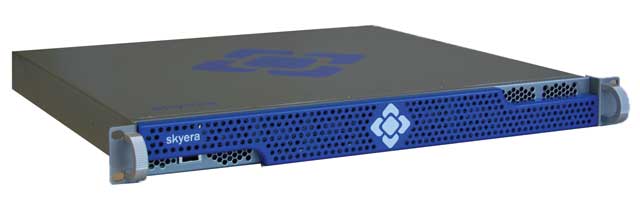
Skyhawk hardware (c) 2012 Skyera, all rights reserved (from their website)

The best, new SSD startup had to be Skyera. A 48TB raw flash dual controller system supporting iSCSI block protocol and using real commercial grade MLC.  The team at Skyera seem to be all ex-SandForce executives and technical people.

Skyera’s team have designed a 1U box called the Skyhawk, with  a phalanx of NAND chips, there own controller(s) and other logic as well. They support software compression and deduplication as well as a special designed RAID logic that claims to reduce extraneous write’s to something just over 1 for  RAID 6, dual drive failure equivalent protection.

Skyera’s underlying belief is that just as consumer HDAs took over from the big monster 14″ and 11″ disk drives in the 90’s sooner or later commercial NAND will take over from eMLC and SLC.  And if one elects to stay with the eMLC and SLC technology you are destined to be one to two technology nodes behind. That is, commercial MLC (in USB sticks, SD cards etc) is currently manufactured with 19nm technology.  The EMLC and SLC NAND technology is back at 24 or 25nm technology.  But 80-90% of the NAND market is being driven by commercial MLC NAND.  Skyera came out this past August.

Coming in second place was Arkologic an all flash NAS box using SSD drives from multiple vendors. In their case a fully populated rack holds about 192TB (raw?) with an active-passive controller configuration.  The main concern I have with this product is that all their metadata is held in UPS backed DRAM (??) and they have up to 128GB of DRAM in the controller.

Arkologic’s main differentiation is supporting QOS on a file system basis and having some connection with a NIC vendor that can provide end to end QOS.  The other thing they have is a new RAID-AS which is special designed for Flash.

I just hope their USP is pretty hefty and they don’t sell it someplace where power is very flaky, because when that UPS gives out, kiss your data goodbye as your metadata is held nowhere else – at least that’s what they told me.

Cloud storage startup of the show

There was more cloud stuff going on at the show. Talked to at least three or four cloud gateway providers.  But the cloud startup of the show had to be Egnyte.  They supply storage services that span cloud storage and on premises  storage with an in band or out-of-band solution and provide file synchronization services for file sharing across multiple locations.  They have some hooks into NetApp and other major storage vendor products that allows them to be out-of-band for these environments but would need to be inband for other storage systems.  Seems an interesting solution that if succesful may help accelerate the adoption of cloud storage in the enterprise, as it makes transparent whether storage you access is local or in the cloud. How they deal with the response time differences is another question.

Different idea startup of the show

The new technology showplace had a bunch of vendors some I had never heard of before but one that caught my eye was Actifio. They were at VMworld but I never got time to stop by.  They seem to be taking another shot at storage virtualization. Only in this case rather than focusing on non-disruptive file migration they are taking on the task of doing a better job of point in time copies for iSCSI and FC attached storage.

I assume they are in the middle of the data path in order to do this and they seem to be using copy-on-write technology for point-in-time snapshots.  Not sure where this fits, but I suspect SME and maybe up to mid-range.

Most enterprise vendors have solved these problems a long time ago but at the low end, it’s a little more variable.  I wish them luck but although most customers use snapshots if their storage has it, those that don’t, seem unable to understand what they are missing.  And then there’s the matter of being in the data path?!

~~~~

If there was a hybrid startup at the show I must have missed them. Did talk with Nimble Storage and they seem to be firing on all cylinders.  Maybe someday we can do a deep dive on their technology.  Tintri was there as well in the new technology showcase and we talked with them earlier this year at Storage Tech Field Day.

The big news at the show was Microsoft purchasing StorSimple a cloud storage gateway/cache.  Apparently StorSimple did a majority of their business with Microsoft’s Azure cloud storage and it seemed to make sense to everyone.

The SNIA suite was hopping as usual and the venue seemed to work well.  Although I would say the exhibit floor and lab area was a bit to big. But everything else seemed to work out fine.

On Wednesday, the CIO from Dish talked about what it took to completely transform their IT environment from a management and leadership perspective.  Seemed like an awful big risk but they were able to pull it off.

All in all, SNW is still a great show to learn about storage technology at least from an end-user perspective.  I just wish some more large vendors would return once again, but alas that seems to be a dream for now.

vSphere 5.1 storage enhancements and future vision

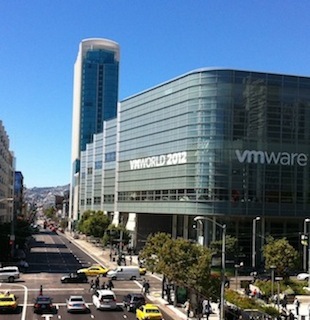
We discussed last year’s vSphere 5 storage changes in a previous post.  And at last week’s VMworld2012 in San Francisco, VMware announced a few new enhancements for vSphere 5.1 but showed more on their vision for the future of storage in VMware environments.

vSphere 5.1 storage enhancements were not as significant as last year’s enhancements.  Specifically, vSphere 5.1 storage oriented changes include:

  • VDP – vSphere Data Protector is a new agentless, deduplicating backup solution from VMware (and EMC) which is now bundled into vSphere and comes free for all users at the Essentials+ level and above. VDP is based on EMC’s Avamar Virtual Edition and provides a new integrated data protection management tab in vCenter Operations Manager GUI.  VDP replaces VDR.
  • vMotion changes – vMotion now supports non-shared storage and specifically, VSA storage environments.  To do this vMotion will now perform a standard storage vMotion to the targeted host before the VM vMotion takes place to move the data to the new location.
  • vSphere replication auto-failback with SRM – SRM 5.1 now supports vSphere replication service automated failback. SRM 5 supported storage array based replication automated failback but had no support for the then announced new VMware, host based replication service. This has been rectified with SRM 5.1.
  • SRM packaging changes – SRM standard now comes at no additional charge with the vCloud Suite Standard license option.  And a new entry level SRM (for 6 CPUs, 3 hosts) comes with Essentials+ to match and provide DR services for VSA environments.

VMware storage vision

VMware took the opportunity to discuss their vision for future offerings in the storage arena.  Specifically,

  • vSphere volumes (vVols) –  vVols will become the new defacto standard unit of granularity and abstraction for storage systems, providing a new allocation unit behind VMDKs and eliminating VMFS.  vVols are intended to define a new interface between vSphere and networked storage systems so that VMDKs can now be replicated, snapshot, cloned, etc.  alone without impacting other VMDKs on the storage system.  vVols are intended to replace LUNs and/or files used as previous holding containers for VMDKs.  vVols -should eliminate the mess of having to define 1000s of LUNs required to support VDI or cloud data centers implementations
  • Virtual flash – VMware’s first internal support for server side flash.  VMware will now be able to partition and allocate the flash on PCIe cards to VMs executing in the ESX server just like physical memory and vCPUs are today.  Also VMware will be able to copy flash cache contents when vMotion-ing VMs to other physical servers.  The intent is to fully support PCIe flash cards for vMotion by warm starting the flash in the target server and bring fast access storage closer to VMs.
  • VSAN – also called distributed storage, takes VSA like services and scales it out to support many more hosts/CPUs and networked storage.   The ultimate goal here seems to be to provide a shared, mid-tier, distributed storage system based on VMware DAS, which will better support vSphere execution and high availability.  VSAN will provide compute and storage within the same host.  It’s intended that VSAN be easier to configure, deploy and manage than current VM shared storage solutions.

Where are they going with all this?

I believe VMware is signaling an intent to get more involved in the storage arena.  Last years move with VSA now seems like just the beginning.

If examined together with their other thrusts for the virtual data center, it all starts to make sense. When these three future storage capabilities are in place, VMware should be better able to configure and support virtual cloud data centers (VCD) built out of commodity servers, commodity storage and commodity networking gear.  With all this in place VCDs should be better able to compete with AWS and other cloud service providers.

The end of enterprise storage, …

I was talking with one IT analyst, Dr. Kevin McIsaac with IBRS in Australia who feels when these three capabilities start rolling out, it signals the beginning of the end of enterprise storage as we know it.  He compares  this to what happened to specialized Unix servers (from HP, Sun, IBM, etc.) prominent at the end of the last century and early this century with the introduction of VMware and commodity high-performance, Intel servers/microprocessor chips.  Although these proprietary Unix servers still exist they are no longer growing market share.

In Kevin’s view, VMware is just following that playbook again, only this time it’s enterprise storage in their sights.  Of course, the other side of this is the enterprise networking that starts to be commoditized by all the virtual networking capabilities VMware is rolling out in VxLAN and Nicira integration as well. (Perhaps subject for another post).

… Not quite yet.

I understand his point and can’t help but agree with parts of it at least at the low end and potentially mid-tier storage.  IMHO however, enterprise storage vendors have a viable defense to all this but it involves providing even more functionality, performance and capabilities than they available today in their systems.

I see it every time I look at my performance charts, anytime you start getting over 300 disk drives, storage sophistication matters more to performance, than just throwing more hardware in the mix.  For an example of this effect checkout my last post on SPC-2 performance correlations.

And of course, VMware might be straining their very profitable relationship with storage vendors today such as Dell, HP, IBM, NetApp, EMC, etc. all of which today highlight and push their virtualization solution throughout their partner community.   If they decide to stop recommending VMware and start focusing on other virtualization offerings this might also stall VMware’s vision.

~~~~

In the end I can’t help but feel that in VMware’s view their challenge, in the long run will come from AWS, Google and other cloud service providers. Whatever they can do to better prepare to compete with this gaggle of cloud purveyors, the better they succeed for their enterprise customer. And ultimately that means more business for VMware.  If enterprise networking and storage vendors have to adapt to that vision, then so be it.

Comments?