Oracle (finally) releases StorageTek VSM6

[Full disclosure: I helped develop the underlying hardware for VSM 1-3 and also way back, worked on HSC for StorageTek libraries.]

Virtual Storage Manager System 6 (VSM6) is here. Not exactly sure when VSM5 or VSM5E were released but it seems like an awful long time in Internet years.  The new VSM6 migrates the platform to Solaris software and hardware while expanding capacity and improving performance.

What’s VSM?

Oracle StorageTek VSM is a virtual tape system for mainframe, System z environments.  It provides a multi-tiered storage system which includes both physical disk and (optional) tape storage for long term big data requirements for z OS applications.

VSM6 emulates up to 256 virtual IBM tape transports but actually moves data to and from VSM Virtual Tape Storage Subsystem (VTSS) disk storage and backend real tape transports housed in automated tape libraries.  As VSM data ages, it can be migrated out to physical tape such as a StorageTek SL8500 Modular [Tape] Library system that is attached behind the VSM6 VTSS or system controller.

VSM6 offers a number of replication solutions for DR to keep data in multiple sites in synch and to copy data to offsite locations.  In addition, real tape channel extension can be used to extend the VSM storage to span onsite and offsite repositories.

One can cluster together up to 256 VSM VTSSs  into a tapeplex which is then managed under one pane of glass as a single large data repository using HSC software.

What’s new with VSM6?

The new VSM6 hardware increases volatile cache to 128GB from 32GB (in VSM5).  Non-volatile cache goes up as well, now supporting up to ~440MB, up from 256MB in the previous version.  Power, cooling and weight all seem to have also gone up (the wrong direction??) vis a vis VSM5.

The new VSM6 removes the ESCON option of previous generations and moves to 8 FICON and 8 GbE Virtual Library Extension (VLE) links. FICON channels are used for both host access (frontend) and real tape drive access (backend).  VLE was introduced in VSM5 and offers a ZFS based commodity disk tier behind the VSM VTSS for storing data that requires longer residency on disk.  Also, VSM supports a tapeless or disk-only solution for high performance requirements.

System capacity moves from 90TB (gosh that was a while ago) to now support up to 1.2PB of data.  I believe much of this comes from supporting the new T10,000C tape cartridge and drive (5TB uncompressed).  With the ability of VSM to cluster more VSM systems to the tapeplex, system capacity can now reach over 300PB.

Somewhere along the way VSM started supporting triple redundancy  for the VTSS disk storage which provides better availability than RAID6.  Not sure why they thought this was important but it does deal with increasing disk failures.

Oracle stated that VSM6 supports up to 1.5GB/Sec of throughput. Presumably this is landing data on disk or transferring the data to backend tape but not both.  There doesn’t appear to be any standard benchmarking for these sorts of systems so, will take their word for it.

Why would anyone want one?

Well it turns out plenty of mainframe systems use tape for a number of things such as data backup, HSM, and big data batch applications.  Once you get past the sunk  costs for tape transports, automation, cartridges and VSMs, VSM storage can be a pretty competitive data storage solution for the mainframe environment.

The fact that most mainframe environments grew up with tape and have long ago invested in transports, automation and new cartridges probably makes VSM6 an even better buy.  But tape is also making a comeback in open systems with LTO-5 and now LTO-6 coming out and with Oracle’s 5TB T10000C cartridge and IBM’s 4TB 3592 JC cartridge.

Not to mention Linear Tape File System (LTFS) as a new tape format that provides a file system for tape data which has brought renewed interest in all sorts of tape storage applications.

Competition not standing still

EMC introduced their Disk Library for Mainframe 6000 (DLm6000) product that supports two different backends to deal with the diversity of tape use in the mainframe environment.  Moreover, IBM has continuously enhanced their Virtual Tape Server the TS7700 but I would have to say it doesn’t come close to these capacities.

Lately, when I talked with long time StorageTek tape mainframe customers they have all said the same thing. When is VSM6 coming out and when will Oracle get their act in gear and start supporting us again.  Hopefully this signals a new emphasis on this market.  Although who is losing and who is winning in the mainframe tape market is the subject of much debate, there is no doubt that the lack of any update to VSM has hurt Oracle StorageTek tape business.

Something tells me that Oracle may have fixed this problem.  We hope that we start to see some more timely VSM enhancements in the future, for their sake and especially for their customers.

~~~~

Comments?

~~~~

Image credit: Interior of StorageTek tape library at NERSC (2) by Derrick Coetzee
 

vSphere 5.1 storage enhancements and future vision

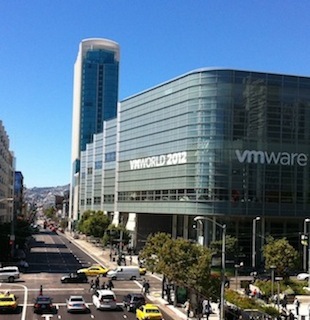
We discussed last year’s vSphere 5 storage changes in a previous post.  And at last week’s VMworld2012 in San Francisco, VMware announced a few new enhancements for vSphere 5.1 but showed more on their vision for the future of storage in VMware environments.

vSphere 5.1 storage enhancements were not as significant as last year’s enhancements.  Specifically, vSphere 5.1 storage oriented changes include:

  • VDP – vSphere Data Protector is a new agentless, deduplicating backup solution from VMware (and EMC) which is now bundled into vSphere and comes free for all users at the Essentials+ level and above. VDP is based on EMC’s Avamar Virtual Edition and provides a new integrated data protection management tab in vCenter Operations Manager GUI.  VDP replaces VDR.
  • vMotion changes – vMotion now supports non-shared storage and specifically, VSA storage environments.  To do this vMotion will now perform a standard storage vMotion to the targeted host before the VM vMotion takes place to move the data to the new location.
  • vSphere replication auto-failback with SRM – SRM 5.1 now supports vSphere replication service automated failback. SRM 5 supported storage array based replication automated failback but had no support for the then announced new VMware, host based replication service. This has been rectified with SRM 5.1.
  • SRM packaging changes – SRM standard now comes at no additional charge with the vCloud Suite Standard license option.  And a new entry level SRM (for 6 CPUs, 3 hosts) comes with Essentials+ to match and provide DR services for VSA environments.

VMware storage vision

VMware took the opportunity to discuss their vision for future offerings in the storage arena.  Specifically,

  • vSphere volumes (vVols) –  vVols will become the new defacto standard unit of granularity and abstraction for storage systems, providing a new allocation unit behind VMDKs and eliminating VMFS.  vVols are intended to define a new interface between vSphere and networked storage systems so that VMDKs can now be replicated, snapshot, cloned, etc.  alone without impacting other VMDKs on the storage system.  vVols are intended to replace LUNs and/or files used as previous holding containers for VMDKs.  vVols -should eliminate the mess of having to define 1000s of LUNs required to support VDI or cloud data centers implementations
  • Virtual flash – VMware’s first internal support for server side flash.  VMware will now be able to partition and allocate the flash on PCIe cards to VMs executing in the ESX server just like physical memory and vCPUs are today.  Also VMware will be able to copy flash cache contents when vMotion-ing VMs to other physical servers.  The intent is to fully support PCIe flash cards for vMotion by warm starting the flash in the target server and bring fast access storage closer to VMs.
  • VSAN – also called distributed storage, takes VSA like services and scales it out to support many more hosts/CPUs and networked storage.   The ultimate goal here seems to be to provide a shared, mid-tier, distributed storage system based on VMware DAS, which will better support vSphere execution and high availability.  VSAN will provide compute and storage within the same host.  It’s intended that VSAN be easier to configure, deploy and manage than current VM shared storage solutions.

Where are they going with all this?

I believe VMware is signaling an intent to get more involved in the storage arena.  Last years move with VSA now seems like just the beginning.

If examined together with their other thrusts for the virtual data center, it all starts to make sense. When these three future storage capabilities are in place, VMware should be better able to configure and support virtual cloud data centers (VCD) built out of commodity servers, commodity storage and commodity networking gear.  With all this in place VCDs should be better able to compete with AWS and other cloud service providers.

The end of enterprise storage, …

I was talking with one IT analyst, Dr. Kevin McIsaac with IBRS in Australia who feels when these three capabilities start rolling out, it signals the beginning of the end of enterprise storage as we know it.  He compares  this to what happened to specialized Unix servers (from HP, Sun, IBM, etc.) prominent at the end of the last century and early this century with the introduction of VMware and commodity high-performance, Intel servers/microprocessor chips.  Although these proprietary Unix servers still exist they are no longer growing market share.

In Kevin’s view, VMware is just following that playbook again, only this time it’s enterprise storage in their sights.  Of course, the other side of this is the enterprise networking that starts to be commoditized by all the virtual networking capabilities VMware is rolling out in VxLAN and Nicira integration as well. (Perhaps subject for another post).

… Not quite yet.

I understand his point and can’t help but agree with parts of it at least at the low end and potentially mid-tier storage.  IMHO however, enterprise storage vendors have a viable defense to all this but it involves providing even more functionality, performance and capabilities than they available today in their systems.

I see it every time I look at my performance charts, anytime you start getting over 300 disk drives, storage sophistication matters more to performance, than just throwing more hardware in the mix.  For an example of this effect checkout my last post on SPC-2 performance correlations.

And of course, VMware might be straining their very profitable relationship with storage vendors today such as Dell, HP, IBM, NetApp, EMC, etc. all of which today highlight and push their virtualization solution throughout their partner community.   If they decide to stop recommending VMware and start focusing on other virtualization offerings this might also stall VMware’s vision.

~~~~

In the end I can’t help but feel that in VMware’s view their challenge, in the long run will come from AWS, Google and other cloud service providers. Whatever they can do to better prepare to compete with this gaggle of cloud purveyors, the better they succeed for their enterprise customer. And ultimately that means more business for VMware.  If enterprise networking and storage vendors have to adapt to that vision, then so be it.

Comments?

Data hypervisor

(c) 2012 Silverton Consulting, Inc. All rights reserved

With all this talk of software defined networking and server virtualization where does storage virtualization stand.  I blogged about some problems with storage virtualization a week or so ago in my post on Storage Utilization is broke and this post takes it to the next level.  Also I was at a financial analyst conference this week in Vail where I heard Mark Lewis of Tekrocket but formerly of EMC discuss the need for a data hypervisor to provide software defined storage.

I now believe what we really need for true storage virtualization is a renewed focus on data hypervisor functionality.  The data hypervisor would need both a control plane and a data plane in order to function properly.   Ideally the control plane would set up the interface and routing for the data plane hardware and the server and/or backend storage would be none the wiser.

DMs everywhere

I envision a scenario where a customer’s application data is packaged with a data hypervisor which runs on a commodity data switch hardware with data plane and control plane software running on it.  Sort of creating (virtual) data machines or DMs.

All enterprise and nowadays most midrange storage provide most of the functionality of a storage control plane such as defining units of storage, setting up physical to logical storage mapping, incorporating monitoring, and management of the physical storage layer, etc.  So control planes are pervasive in today’s storage but proprietary.

In addition most storage systems have data plane functionality which operates to connect a host IO request to the actual data which resides in backend storage or internal cache.  But again although data planes are everywhere in storage today they are all proprietary to a specific vendor’s storage system.

Data switch needed

But in order to utilize a data hypervisor and create a more general purpose control plane layer, we need a more generic data plane layer that operates on commodity hardware. This is different from today’s SAN storage switches or DCB switches but similar in a some ways.

The functions of the data switch/data plane layer would be to take routing instructions from the control plane layer and direct the server IO request to the proper storage unit using the data plane layer.  Somewhere in this world view, probably at the data plane level it would introduce data protection services like RAID or other erasure coding schemes, point in time copy/clone services and replication services and other advanced storage features needed by enterprise storage today.

Also it would need to provide some automated storage movement across and within tiers of physical storage and it would connect server storage interfaces at the front end to storage interfaces at the backend.  Not unlike SAN or DCB switches but with much more advanced functionality.

Ideally data switch storage interfaces could attach to dedicated JBOD, Flash arrays as well as systems using DAS  storage.  In addition, it would be nice if the data switch could talk to real storage arrays on SAN, IP/SANs or NFS&CIFS/SMB storage systems.

The other thing one would like out of a data switch is support for a universal translator that would map one protocol to another, such as iSCSI to SAS, NFS to FC, or FC to NFS and any other combination, depending on the needs of the server and the storage in the configuration.

Now if the data switch were built on top of commodity x86 hardware and software with the data switch as just a specialized application that would create the underpinnings for a true data hypervisor with a control and data plane that could be independent and use anybody’s storage.

Data hypervisor

Assuming all this were available then we would have true storage virtualization.  With these capabilities, storage could be repurposed on the fly, added to, subtracted from, and in general be a fungible commodity not unlike server processing MIPs under VMware or Hyper-V.

Application data would then needed to be packaged into a data machine which would offer all the host services required to support host data access.  The data hypervisor would handle the linkages required to interface with the control and data layers.

Applications could be configured to utilize available storage at ease and storage could grow,  shrink or move to accommodate the required workload just as easily as VMs can be deployed today.

How we get there

Aside from the VMware, Citrix, Microsoft thrusts towards virtual storage there are plenty of storage virtualization solutions that can control most backend enterprise SAN storage. However, the problem with these solutions is that in general the execute only on a specific vendors hardware and don’t necessarily talk to DAS or JBOD storage.

In addition, not all of the current generation storage virtualization solutions are unified. That is most of these today only talk FC, FCoE or iSCSI and don’t support NFS or CIFS/SMB.

These don’t appear to be insurmountable obstacles and with proper allocation of R&D funding, could all be solved.

However the more problematic is that none of these solutions operate on commodity hardware or commodity software.

The hardware is probably the easiest to deal with. Today many enterprise storage systems are built ontop of x86 processor storage controllers. Albeit sometimes they incorporate specialized packaging for redundancy and high availability.

The harder problem may be commodity software. Although the genesis for a few storage virtualization systems might come from BSD or other “commodity” software operating systems. They have been modified over the years to no longer represent anything that can run on standard off the shelf operating systems.

Then again some storage virtualization systems started out with special home grown hardware and software. As such, converting these over to something more commodity oriented would be a major transition.

But the challenge is how to get there from here and would anyone want to take this on.  The other problem is that the value add that storage vendors supply currently would be somewhat eroded.  Not unlike what happened to proprietary Unix systems with the advent of VMware.

But this will not take place overnight and the company that takes this on and makes a go at it can have a significant software monopoly that would be hard to crack.

Perhaps it will take a startup to do this but I believe the main enterprise storage vendors are best positioned to take this on.

Comments?

EMC buys ExtremeIO

Wow, $430M for a $25M startup that’s been around since 2009 and hasn’t generated any revenue yet.  It probably compares well against Facebook’s recent $1B acquisition of Instagram but still it seems a bit much.

It certainly signals a significant ongoing interest in flash storage in whatever form that takes. Currently EMC offers PCIe flash storage (VFCache), SSD options in VMAX and VNX, and has plans for a shared flash cache array (project: Thunder).  An all-flash storage array makes a lot of sense if you believe this represents an architecture that can grab market share in storage.

I have talked with ExtremeIO in the past but they were pretty stealthy then (and still are as far as I can tell). Not much details about their product architecture, specs on performance, interfaces or anything substantive. The only thing they told me then was that they were in the flash array storage business.

In a presentation to SNIA’s BOD last summer I said that the storage industry is in revolution.  When a 20 or so device system can generate ~250K or more IO/second with a single controller, simple interfaces, and solid state drives, we are no longer in Kansas anymore.

Can a million IO storage system be far behind.

It seems to me, that doing enterprise storage performance has gotten much easier over the last few years.  Now that doesn’t mean enterprise storage reliability, availability or features but just getting to that level of performance before took 1000s of disk drives and racks of equipment.  Today, you can almost do it in a 2U enclosure and that’s without breaking a sweat.

Well that seems to be the problem, with a gaggle of startups, all vying after SSD storage in one form or another the market is starting to take notice.  Maybe EMC felt that it was a good time to enter the market with their own branded product, they seem to already have all the other bases covered.

Their website mentions that ExtremeIO was a load balanced, deduplicated clustered storage system with enterprise class services (this could mean anything). Nonetheless, a deduplicating, clustered SSD storage system built out of commodity servers could define at least 3 other SSD startups I have recently talked with and a bunch I haven’t talked with in awhile.

Why EMC decided that ExtremeIO was the one to buy is somewhat a mystery.  There was some mention of an advanced data protection scheme for the flash storage but no real details.

Nonetheless, enterprise SSD storage services with relatively low valuation and potential to disrupt enterprise storage might be something to invest in.  Certainly EMC felt so.

~~~~

Comments, anyone know anything more about ExtremeIO?

Latest SPECsfs2008 results, over 1 million NFS ops/sec – chart-of-the-month

Column chart showing the top 10 NFS througput operations per second for SPECsfs2008
(SCISFS111221-001) (c) 2011 Silverton Consulting, All Rights Reserved

[We are still catching up on our charts for the past quarter but this one brings us up to date through last month]

There’s just something about a million SPECsfs2008(r) NFS throughput operations per second that kind of excites me (weird, I know).  Yes it takes over 44-nodes of Avere FXT 3500 with over 6TB of DRAM cache, 140-nodes of EMC Isilon S200 with almost 7TB of DRAM cache and 25TB of SSDs or at least 16-nodes of NetApp FAS6240 in Data ONTAP 8.1 cluster mode with 8TB of FlashCache to get to that level.

Nevertheless, a million NFS throughput operations is something worth celebrating.  It’s not often one achieves a 2X improvement in performance over a previous record.  Something significant has changed here.

The age of scale-out

We have reached a point where scaling systems out can provide linear performance improvements, at least up to a point.  For example, the EMC Isilon and NetApp FAS6240 had a close to linear speed up in performance as they added nodes indicating (to me at least) there may be more there if they just throw more storage nodes at the problem.  Although maybe they saw some drop off and didn’t wish to show the world or potentially the costs became prohibitive and they had to stop someplace.   On the other hand, Avere only benchmarked their 44-node system with their current hardware (FXT 3500), they must have figured winning the crown was enough.

However, I would like to point out that throwing just any hardware at these systems doesn’t necessary increase performance.  Previously (see my CIFS vs NFS corrected post), we had shown the linear regression for NFS throughput against spindle count and although the regression coefficient was good (~R**2 of 0.82), it wasn’t perfect. And of course we eliminated any SSDs from that prior analysis. (Probably should consider eliminating any system with more than a TB of DRAM as well – but this was before the 44-node Avere result was out).

Speaking of disk drives, the FAS6240 system nodes had 72-450GB 15Krpm disks, the Isilon nodes had 24-300GB 10Krpm disks and each Avere node had 15-600GB 7.2Krpm SAS disks.  However the Avere system also had a 4-Solaris ZFS file storage systems behind it each of which had another 22-3TB (7.2Krpm, I think) disks.  Given all that, the 16-node NetApp system, 140-node Isilon and the 44-node Avere systems had a total of 1152, 3360 and 748 disk drives respectively.   Of course, this doesn’t count the system disks for the Isilon and Avere systems nor any of the SSDs or FlashCache in the various configurations.

I would say with this round of SPECsfs2008 benchmarks scale-out NAS systems have come out.  It’s too bad that both NetApp and Avere didn’t release comparable CIFS benchmark results which would have helped in my perennial discussion on CIFS vs. NFS.

But there’s always next time.

~~~~

The full SPECsfs2008 performance report went out to our newsletter subscriber’s last December.  A copy of the full report will be up on the dispatches page of our site sometime later this month (if all goes well). However, you can see our full SPECsfs2008 performance analysis now and subscribe to our free monthly newsletter to receive future reports directly by just sending us an email or using the signup form above right.

For a more extensive discussion of file and NAS storage performance covering top 30 SPECsfs2008 results and NAS storage system features and functionality, please consider purchasing our NAS Buying Guide available from SCI’s website.

As always, we welcome any suggestions on how to improve our analysis of SPECsfs2008 results or any of our other storage system performance discussions.

Comments?

Intel acquires InfiniBand fabric technology from Qlogic

Isilon Packaging by ChrisDag (cc) (from Flickr)”][InfiniBand interconnected] Isilon Packaging by ChrisDag (cc) (from Flickr)Intel announced today that they are going to acquire the InfiniBand (IB) fabric technology business from Qlogic.

From many analyst’s perspective, IB is one of the only technologies out there that can efficiently interconnect a cluster of commodity servers into a supercomputing system.

What’s InfiniBand?

Recall that IB is one of three reigning data center fabric technologies available today which include 10GbE, and 16 Gb/s FC.  IB is currently available in DDR, QDR and FDR modes of operation, that is 5Gb/s, 10Gb/s or 14Gb/s, respectively per single lane, according to the IB update (see IB trade association (IBTA) technology update).  Systems can aggregate multiple IB lanes in units of 4 or 12 paths (see wikipedia IB article), such that an IB QDRx4 supports 40Gb/s and a IB FDRx4 currently supports 56Gb/s.

The IBTA pitch cited above showed that IB is the most widely used interface for the top supercomputing systems and supports the most power efficient interconnect available (although how that’s calculated is not described).

Where else does IB make sense?

One thing IB has going for it is low latency through the use of RDMA or remote direct memory access.  That same report says that an SSD directly connected through a FC takes about ~45 μsec to do a read whereas the same SSD directly connected through IB using RDMA would only take ~26 μsec.

However, RDMA technology is now also coming out on 10GbE through RDMA over Converged Ethernet (RoCE, pronounced “rocky”).  But ITBA claims that IB RDMA has a 0.6 μsec latency and the RoCE has a 1.3 μsec.  Although at these speed, 0.7 μsec doesn’t seem to be a big thing, it doubles the latency.

Nonetheless, Intel’s purchase is an interesting play.  I know that Intel is focusing on supporting an ExaFLOP HPC computing environment by 2018 (see their release).  But IB is already a pretty active technology in the HPC community already and doesn’t seem to need their support.

In addition, IB has been gradually making inroads into enterprise data centers via storage products like the Oracle Exadata Storage Server using the 40 Gb/s IB QDRx4 interconnects.  There are a number of other storage products out that use IB as well from EMC Isilon, SGI, Voltaire, and others.

Of course where IB can mostly be found today is in computer to computer interconnects and just about every server vendor out today, including Dell, HP, IBM, and Oracle support IB interconnects on at least some of their products.

Whose left standing?

With Qlogic out I guess this leaves Cisco (de-emphasized lately), Flextronix, Mellanox, and Intel as the only companies that supply IB switches. Mellanox, Intel (from Qlogic) and Voltaire supply the HCA (host channel adapter) cards which provide the server interface to the switched IB network.

Probably a logical choice for Intel to go after some of this technology just to keep it moving forward and if they want to be seriously involved in the network business.

IB use in Big Data?

On the other hand, it’s possible that Hadoop and other big data applications could conceivably make use of IB speeds and as these are mainly vast clusters of commodity systems it would be a logical choice.

There is some interesting research on the advantages of IB in HDFS (Hadoop) system environments (see Can high performance interconnects boost Hadoop distributed file system performance) out of Ohio State University.  This research essentially says that Hadoop HDFS can perform much better when you combine IB with IPoIB (IP over IB, see OpenFabrics Alliance article) and SSDs.  But SSDs alone do not provide as much benefit.   (Although my reading of the performance charts seems to indicate it’s not that much better than 10GbE with TOE?).

It’s possible other Big data analytics engines are considering using IB as well.  It would seem to be a logical choice if you had even more control over the software stack.

~~~~

Comments?


IBM’s 120PB storage system

Susitna Glacier, Alaska by NASA Goddard Photo and Video (cc) (from Flickr)

Talk about big data, Technology Review reported this week that IBM is building a 120PB storage system for some unnamed customer.  Details are sketchy and I cannot seem to find any announcement of this on IBM.com.

Hardware

It appears that the system uses 200K disk drives to support the 120PB of storage.  The disk drives are packed in a new wider rack and are water cooled.  According to the news report the new wider drive trays hold more drives than current drive trays available on the market.

For instance, HP has a hot pluggable, 100 SFF (small form factor 2.5″) disk enclosure that sits in 3U of standard rack space.  200K SFF disks would take up about 154 full racks, not counting the interconnect switching that would be required.  Unclear whether water cooling would increase the density much but I suppose a wider tray with special cooling might get you more drives per floor tile.

There was no mention of interconnect, but today’s drives use either SAS or SATA.  SAS interconnects for 200K drives would require many separate SAS busses. With an SAS expander addressing 255 drives or other expanders, one would need at least 4 SAS busses but this would have ~64K drives per bus and would not perform well.  Something more like 64-128 drives per bus would have much better performer and each drive would need dual pathing, and if we use 100 drives per SAS string, that’s 2000 SAS drive strings or at least 4000 SAS busses (dual port access to the drives).

The report mentioned GPFS as the underlying software which supports three cluster types today:

  • Shared storage cluster – where GPFS front end nodes access shared storage across the backend. This is generally SAN storage system(s).  But the requirements for high density, it doesn’t seem likely that the 120PB storage system uses SAN storage in the backend.
  • Networked based cluster – here the GPFS front end nodes talk over a LAN to a cluster of NSD (network storage director?) servers which can have access to all or some of the storage. My guess is this is what will be used in the 120PB storage system
  • Shared Network based clusters – this looks just like a bunch of NSD servers but provides access across multiple NSD clusters.

Given the above, with ~100 drives per NSD server means another 1U extra per 100 drives or (given HP drive density) 4U per 100 drives for 1000 drives and 10 IO servers per 40U rack, (not counting switching).  At this density it takes ~200 racks for 120PB of raw storage and NSD nodes or 2000 NSD nodes.

Unclear how many GPFS front end nodes would be needed on top of this but even if it were 1 GPFS frontend node for every 5 NSD nodes, we are talking another 400 GPFS frontend nodes and at 1U per server, another 10 racks or so (not counting switching).

If my calculations are correct we are talking over 210 racks with switching thrown in to support the storage.  According to IBM’s discussion on the Storage challenges for petascale systems, it probably provides ~6TB/sec of data transfer which should be easy with 200K disks but may require even more SAS busses (maybe ~10K vs. the 2K discussed above).

Software

IBM GPFS is used behind the scenes in IBM’s commercial SONAS storage system but has been around as a cluster file system designed for HPC environments for over 15 years or more now.

Given this many disk drives something needs to be done about protecting against drive failure.  IBM has been talking about declustered RAID algorithms for their next generation HPC storage system which spreads the parity across more disks and as such, speeds up rebuild time at the cost of reducing effective capacity. There was no mention of effective capacity in the report but this would be a reasonable tradeoff.  A 200K drive storage system should have a drive failure every 10 hours, on average (assuming a 2 million hour MTBF).  Let’s hope they get drive rebuild time down much below that.

The system is expected to hold around a trillion files.  Not sure but even at 1024 bytes of metadata per file, this number of files would chew up ~1PB of metadata storage space.

GPFS provides ILM (information life cycle management, or data placement based on information attributes) using automated policies and supports external storage pools outside the GPFS cluster storage.  ILM within the GPFS cluster supports file placement across different tiers of storage.

All the discussion up to now revolved around homogeneous backend storage but it’s quite possible that multiple storage tiers could also be used.  For example, a high density but slower storage tier could be combined with a low density but faster storage tier to provide a more cost effective storage system.  Although, it’s unclear whether the application (real world modeling) could readily utilize this sort of storage architecture nor whether they would care about system cost.

Nonetheless, presumably an external storage pool would be a useful adjunct to any 120PB storage system for HPC applications.

Can it be done?

Let’s see, 400 GPFS nodes, 2000 NSD nodes, and 200K drives. Seems like the hardware would be readily doable (not sure why they needed watercooling but hopefully they obtained better drive density that way).

Luckily GPFS supports Infiniband which can support 10,000 nodes within a single subnet.  Thus an Infiniband interconnect between the GPFS and NSD nodes could easily support a 2400 node cluster.

The only real question is can a GPFS software system handle 2000 NSD nodes and 400 GPFS nodes with trillions of files over 120PB of raw storage.

As a comparison here are some recent examples of scale out NAS systems:

It would seem that a 20X multiplier times a current Isilon cluster or even a 10X multiple of a currently supported SONAS system would take some software effort to work together, but seems entirely within reason.

On the other hand, Yahoo supports a 4000-node Hadoop cluster and seems to work just fine.  So from a feasability perspective, a 2500 node GPFS-NSD node system seems just a walk in the park for Hadoop.

Of course, IBM Almaden is working on project to support Hadoop over GPFS which might not be optimum for real world modeling but would nonetheless support the node count being talked about here.

——

I wish there was some real technical information on the project out on the web but I could not find any. Much of this is informed conjecture based on current GPFS system and storage hardware capabilities. But hopefully, I haven’t traveled to far astray.

Comments?


Pure Storage surfaces

1 controller X 1 storage shelf (c) 2011 Pure Storage (from their website)

We were talking with Pure Storage last week, another SSD startup which just emerged out of stealth mode today.  Somewhat like SolidFire which we discussed a month or so ago, Pure Storage uses only SSDs to provide primary storage.  In this case, they are supporting a FC front end, with an all SSDs backend, and implementing internal data deduplication and compression, to try to address the needs of enterprise tier 1 storage.

Pure Storage is in final beta testing with their product and plan to GA sometime around the end of the year.

Pure Storage hardware

Their system is built around MLC SSDs which are available from many vendors but with a strategic investment from Samsung, currently use that vendor’s storage.  As we know, MLC has write endurance limitations but Pure Storage was built from the ground up knowing they were going to use this technology and have built their IP to counteract these issues.

The system is available in one or two controller configurations, with an Infiniband interconnect between the controllers, 6Gbps SAS backend, 48GB of DRAM per controller for caching purposes, and NV-RAM for power outages.  Each controller has 12-cores supplied by 2-Intel Xeon processor chips.

With the first release they are limiting the controllers to one or two (HA option) but their storage system is capable of clustering together many more, maybe even up to 8-controllers using the Infiniband back end.

Each storage shelf provides 5.5TB of raw storage using 2.5″ 256GB MLC SSDs.  It looks like each controller can handle up to 2-storage shelfs with the HA (dual controller option) supporting 4 drive shelfs for up to 22TB of raw storage.

Pure Storage Performance

Although these numbers are not independently verified, the company says a single controller (with 1-storage shelf) they can do 200K sustained 4K random read IOPS, 2GB/sec bandwidth, 140K sustained write IOPS, or 500MB/s of write bandwidth.  A dual controller system (with 2-storage shelfs) can achieve 300K random read IOPS, 3GB/sec bandwidth, 180K write IOPS or 1GB/sec of write bandwidth.  They also claim that they can do all this IO with an under 1 msec. latency.

One of the things they pride themselves on is consistent performance.  They have built their storage such that they can deliver this consistent performance even under load conditions.

Given the amount of SSDs in their system this isn’t screaming performance but is certainly up there with many enterprise class systems sporting over 1000 disks.  The random write performance is not bad considering this is MLC.  On the other hand the sequential write bandwidth is probably their weakest spec and reflects their use of MLC flash.

Purity software

One key to Pure Storage (and SolidFire for that matter) is their use of inline data compression and deduplication. By using these techniques and basing their system storage on MLC, Pure Storage believes they can close the price gap between disk and SSD storage systems.

The problems with data reduction technologies is that not all environments can benefit from them and they both require lots of CPU power to perform well.  Pure Storage believes they have the horsepower (with 12 cores per controller) to support these services and are focusing their sales activities on those (VMware, Oracle, and SQL server) environments which have historically proven to be good candidates for data reduction.

In addition, they perform a lot of optimizations in their backend data layout to prolong the life of MLC storage. Specifically, they use a write chunk size that matches the underlying MLC SSDs page width so as not to waste endurance with partial data writes.  Also they migrate old data to new locations occasionally to maintain “data freshness” which can be a problem with MLC storage if the data is not touched often enough.  Probably other stuff as well, but essentially they are tuning their backend use to optimize endurance and performance of their SSD storage.

Furthermore, they have created a new RAID 3D scheme which provides an adaptive parity scheme based on the number of available drives that protects against any dual SSD failure.  They provide triple parity, dual parity for drive failures and another parity for unrecoverable bit errors within a data payload.  In most cases, a failed drive will not induce an immediate rebuild but rather a reconfiguration of data and parity to accommodate the failing drive and rebuild it onto new drives over time.

At the moment, they don’t have snapshots or data replication but they said these capabilities are on their roadmap for future delivery.

—-

In the mean time, all SSD storage systems seem to be coming out of the wood work. We mentioned SolidFire, but WhipTail is another one and I am sure there are plenty more in stealth waiting for the right moment to emerge.

I was at a conference about two months ago where I predicted that all SSD systems would be coming out with little of the engineering development of storage systems of yore. Based on the performance available from a single SSD, one wouldn’t need 100s of SSDs to generate 100K IOPS or more.  Pure Storage is doing this level of IO with only 22 MLC SSDs and a high-end, but essentially off-the-shelf controller.

Just imagine what one could do if you threw some custom hardware at it…

Comments?